
History
A part of history in Flanders
Flanders is a region, not a single city, and the First World War left a deep mark on its western fields. The fighting on the Ypres Salient, around the town of Ypres (Ieper), drew armies from many countries. Today the same landscape is visited by people who come to understand that history, and by others who simply pass through on a wider Belgian trip.
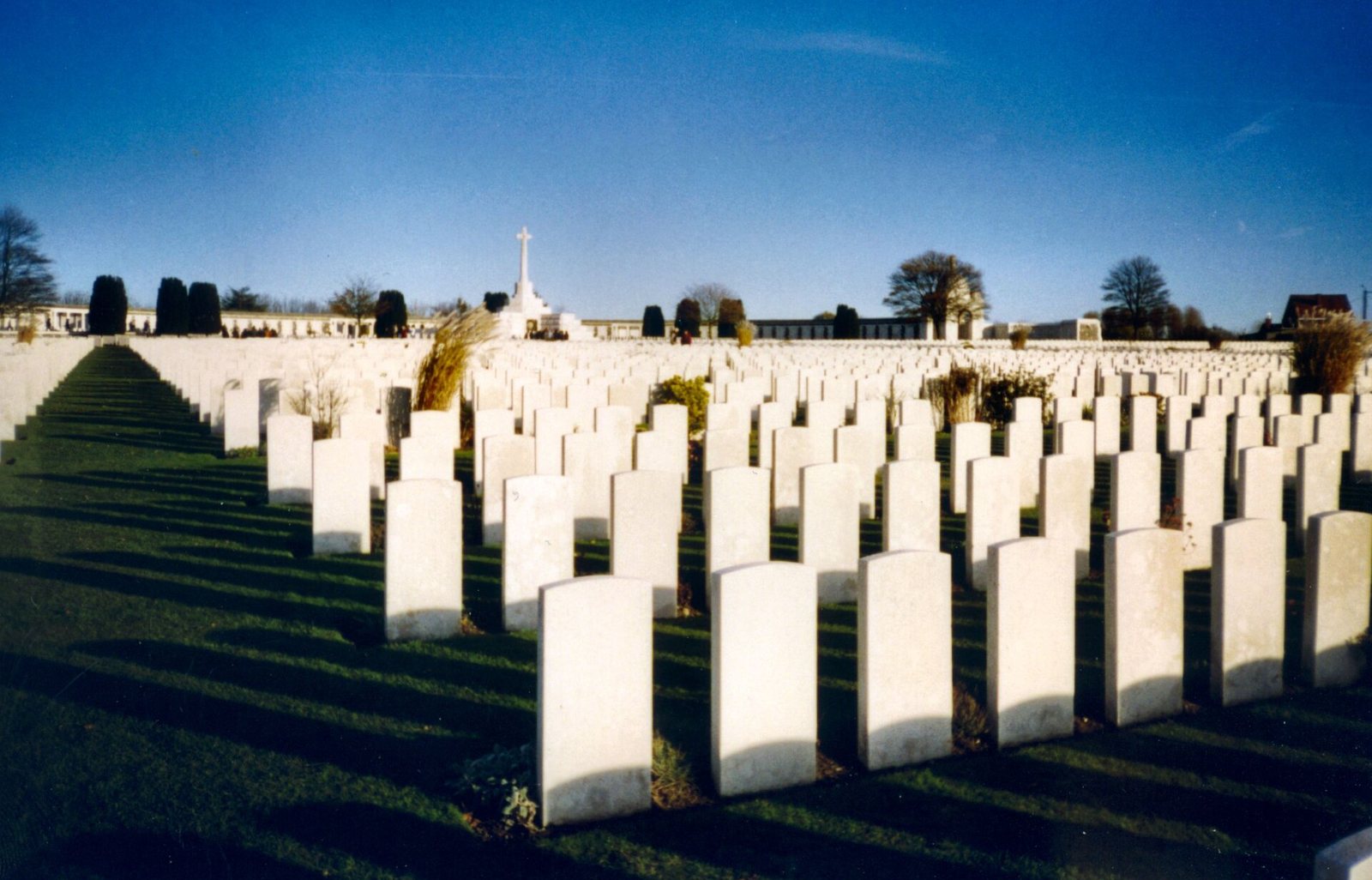
Sections of trench have been preserved so that the layout of the front is not left only to maps and memoirs. They run for long stretches around Ypres and are maintained as historic sites. The ground also holds many cemeteries. Two of the most visited are Tyne Cot, a Commonwealth cemetery and the largest of its kind in the world, and the German military cemetery at Langemark. Together they make the scale of the fighting around Ypres difficult to ignore.
This note is a traveller’s introduction, not a military history. If you go, leave time to read the names and to treat the cemeteries as places of burial, not as a backdrop.